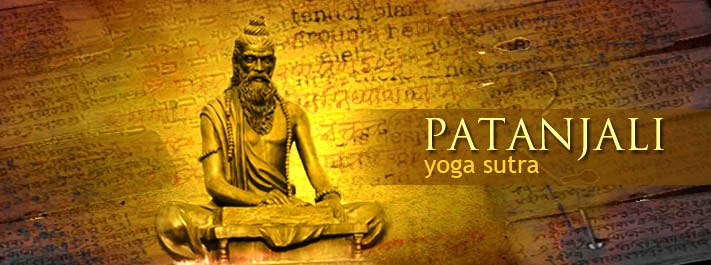
Fast is slow on the path of understanding the purport of the Patanjali Yoga a Sutras.
But if you insist on a quick short brief, here is an excerpt from Gurudev Sri Sri Ravi Shankar’s commentary on the Patanjali Yoga Sutras.
Our minds are constantly chattering. There are 5 types of modulations in the mind – Pramana (seeking proof), Viparyaya (wrong notions), Vikalpa (fantasies), Nidra (Sleep) or Smriti (Memory). When the mind is constantly chattering, our life is not in flow.
We all come with samskaras (impressions) which drive the modulations of our mind which in turn makes us miserable from time to time. Yoga clears those impressions. We then start to impact our environment and energies within and around us.
All miseries fall into one of these 5 categories
- Avidya (Ignorance of the true nature of the world, the lack of ability to make the right choices)
- Asmita (I’ness – constantly thinking about oneself)
- Raaga (Cravings)
- Dwesha (Aversions)
- Abhinivesha (Fears that hold us back)
When these miseries are eliminated, supreme power blossoms within us allowing life to bloom in its full potential, devoid of non-conducive actions the effect of these actions.
When these are eliminated we reach the core of our existence and our existence becomes limitless. It is said that if you don’t clean yourself of these miseries in this life, you will carry these for life times.
In order to overcome miseries, there are 3 steps to follow
Tapaha (Endurance), Swadhyaya (Self-study) and Ishwara Pranidhana (Faith or Devotion to the divine)
Tapaha is for the body, mind and speech.
Tapaha also means enduring the fire. There are 5 types of fire. The physical fire that sustains life is called Bhootagni. The fire of passion is called Kamaagni. Allowing this fire to bake you or burn you without succumbing to it grows one’s potential, developing valour, joy, enthusiasm and will-power. The third type of fire is Jataragni – fire of hunger and digestion. Again allowing this fire to come up clears the toxins in the body. Stuffing ourselves every hour quells this fire creating disease in the body. Hence the importance to fasting in eastern traditions. The next fire is called Premaagni or Jnanaagni – that of love or knowledge. Love creates longing which is uncomfortable in the beginning but then blossoms to bliss.. Real knowledge kindles this fire. And finally Babaagni – fire of criticism. Being able to withstand criticism while living within social norms allows us to be steadfast in our progress towards our goals. Going through these fires purifies us. Tapas is allowing these fires to purify us and not be literally taken as walking through a physical fire.
Tapas in the speech is being aware of what is being said with the intention of uplifting people. One’s words can be a flower or a knife. Vangmaya tapas is having a speech that does not ruffle people’s calm and quiet mind.
And then there is the Tapas of the mind – Manaha Prasadaha – maintaining contentment in the mind. Sowmyatam – being calm and composed. Mounam – silence in the mind without chattering. Aatma vinigraha – remaining in the self, bringing one back to the self again and again.
Swadhyaya
But Tapas can bring up ego – a sense of one being something special or great. And hence it is important to look into oneself – Swadhyaya which is understanding the motives of one’s action. Is one doing something to look great? Becoming very clear about what one really wants out of these practices, looking into one’s motives. This can be achieved by observing one’s body (kaaynupaschana), the sensations in the body (Vedanaaanupaschana), observing one’s mind (Chittananupaschana) and observing one’s very nature (Dhammnupaschana). A proper yoga teacher teaches participants to observe one’s body, sensations in one’s body, the mind and move closer to one’s true nature.
Ishwara Pranidhana
And finally there is ‘Ishwara Pranidhana’ or surrendering to a greater power or the Master allows us to remain grounded without getting a sense of ‘I am great’
The only way to overcome the aforementioned miseries is through practice of the above with dispassion
Through practice a divided mind can be made one pointed. Misery can be transformed to joy, peace and bliss. You know that you are making progress because nature starts supporting you. Your Prana (life force energy) becomes steady and you feel clear as a crystal. There is a feeling of expansion as against a feeling of tightness when sad.
Usually when we are excited, we lack awareness of our surroundings and are often insensitive. A drunk is happy but not aware. When we are sad, we are too bothered by our situation and surroundings. Someone very aware is often quite serious and not light-hearted. Practice of Yoga allows us to be in a state of equanimity where there is keen awareness with expanded joy.
When one experiences more and more thoughtlessness, grace flows and spiritual awakening happens. This awareness comes with intuitive knowledge. Intuitive knowledge is different from mere intellectual knowledge of facts and figures.
Dispassion rings valour and courage to live in the world. Dispassion is not discarding the world but living in a state of total acceptance.
On the journey though there can be obstacles to our practice which are of 9 types
(a) Vyaadi (Physical disease)
(b) Styana (Mental illness)
(c) Samshaya (Doubt)
(d) Pramada (Wilful wrongdoing)
(e) Alasya (Laziness)
(f) Avirati (Obsession, attachment)
(g) Bhrantidarshan (Delusion)
(h) Aalabda (Feeling stuck)
(i) Anavasthitha (Any good feelings don’t last long)
These obstacles manifest in the form of bitterness (Dourmanasya), sorrow (Dukha), delusion (Bhrantidarshan), irregular breath (Shwasa Prashwasa) and lack of control over the body and senses (Angamejayatva)
To get rid of the above requires practice with dispassion. In order to structure the practice, Patanjali the scientist talks of the 8 limbs of Yoga.
There are 8 limbs to Yoga – Ashtanga Yoga. These are not sequential. Like pulling one leg of the chair brings the whole chair to you, holding steadfastly to any of these 8 limbs establishes you firmly in the path of Yoga. The husk surrounding the seed is gone and the seed sprouts
The Eight Limbs of Yoga
Yamas and its complement, Niyamas, represent a series of ‘right living’ or ethical rules.
Yamas – the five social ethics
- Ahimsa – Non-violence in action, speech and thoughts
- Satyam – Truthfulness in intention, remaining established in the higher truth
- Asteya – Non-stealing
- Brahmacharya – Divine conduct, celibate when single, faithful when married
- Aparigraha – Not accumulating things unnecessarily and not desiring things that belong to others.
Niyamas – the five personal ethics
- Saucha – Cleanliness of the body and mind
- Santosha – Contentment, remaining happy
- Tapas – Austerity and self-discipline
- Swadhyaya – Study of the Self, abiding in the Self
- Ishwarapranidhana – Surrendering to God, honouring the Divine.
Asanas – Yoga postures or postures.
Pranayamas – Proper regulation of life force (Prana) through certain breathing techniques.
Pratayahara – Taking the senses inwards.
Dharana – One-pointed focus.
Dhyana – Meditation
Samadhi – the highest state of consciousness. This is possible to achieve during meditation
Quitening the modulations of the mind is Yoga. It takes a lot of practice for a long time. Practice has to be done consistently and with dispassion.
This requires a skill. This skill in life can be achieved through deep rest. Not through the unconsciousness in sleep or intoxication
When the practice of Yoga is given preference, life starts to flow and we are freed from miseries.
Practicing the 8 limbs of Yoga leads to ‘Viveka’ and elimination of purities. The husk is gone and the seed sprouts. Ones ability to let of go of tendencies that are non-conducive to progress increases
When we remain established in the unchanging, our actions yield fruits faster. Through this practices the intellect gets purified. The mind becomes even and harmonious. One-pointedness or concentration is much easily attained. And one can control one’s senses and temptations.
Through practice the 5 veils of misery become thin and more and more subtle and you are able to take your mind back to the source.
If one does not clean oneself of these miseries through meditation, then these miseries carry on for many life times. You create a Karma account that will bear fruit in this life and the next. If meditation is boring, then that is because of your past Karma. It is important to endure the boredom so you can overcome this Karma. That is a form of Tapas – endurance.
Anything that gives us lasting happiness feels difficult in the beginning and is called ‘Saatvic’. While that which gives joy in the beginning and pain in the end is ‘Rajasic’. ‘Tamasic’ is that which is misery from beginning to end.
To attain ‘Saatvic’ happiness, discipline is required. The practice of Asanas, Pranayama and Dhyana help to build that discipline and slowly but surely our journey on the 8 limbs of Yoga leads to blossoming of our full potential.
The Asanas build our physical body, our mental strength and an intuitive understanding of what is right for us. Our choices which are often unconscious become more conscious. The Pranayamas lead to thinning of the veil of misery. Dhyana clears impressions which drive our unonscious choices. Sri Sri Yoga is a beautiful blend of the limbs of Yoga to provide us the tools for consistent practice.
 thescienceofjoydotcom
Wonderfully explained !!
LikeLike